Skip to content

SMB Growth#

Fractional AI Team vs. Point Solutions: What SMBs Actually Need
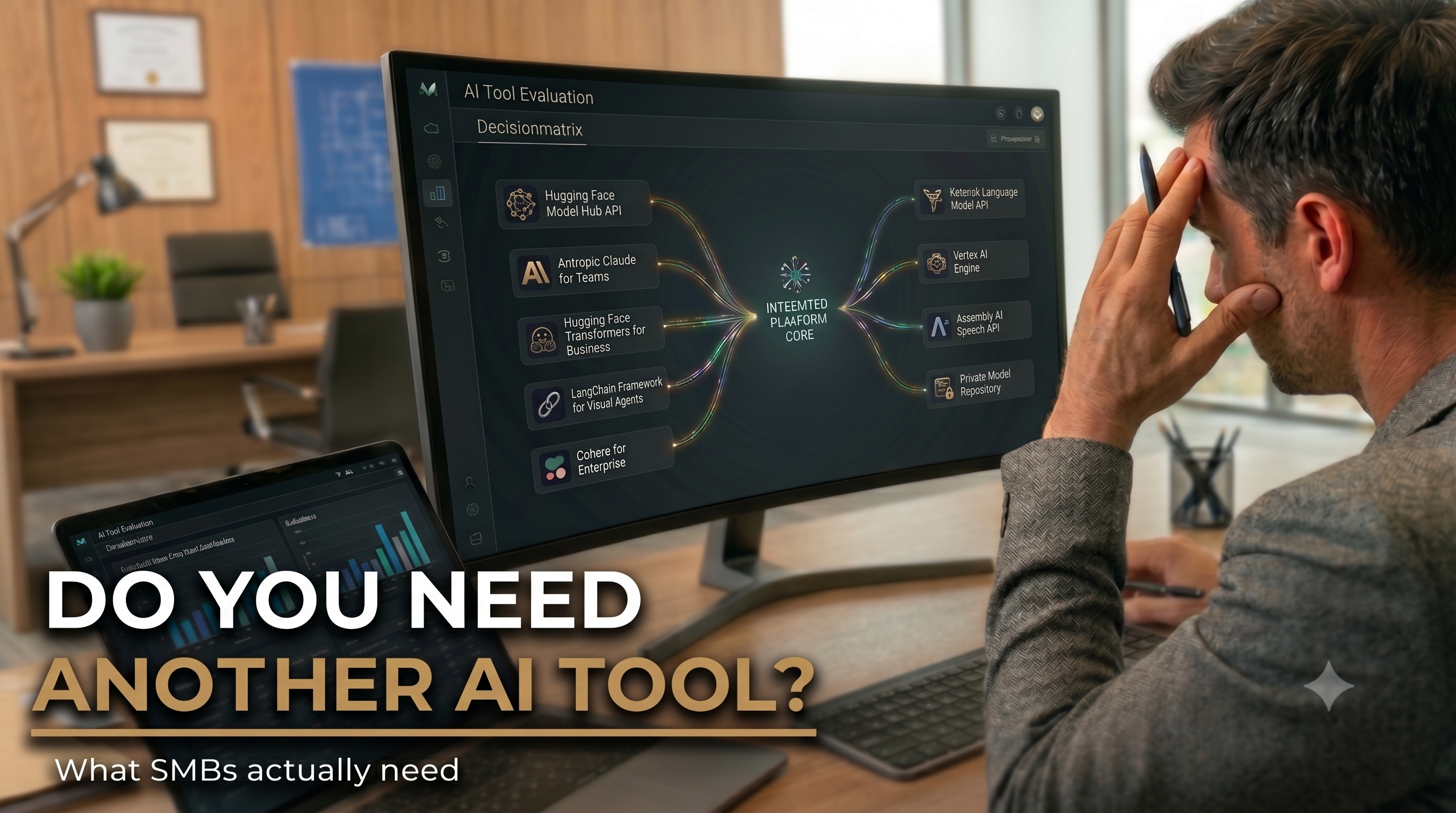
Do you need another AI tool? What SMBs actually need. A business owner overwhelmed at his desk, facing a screen full of AI tools.

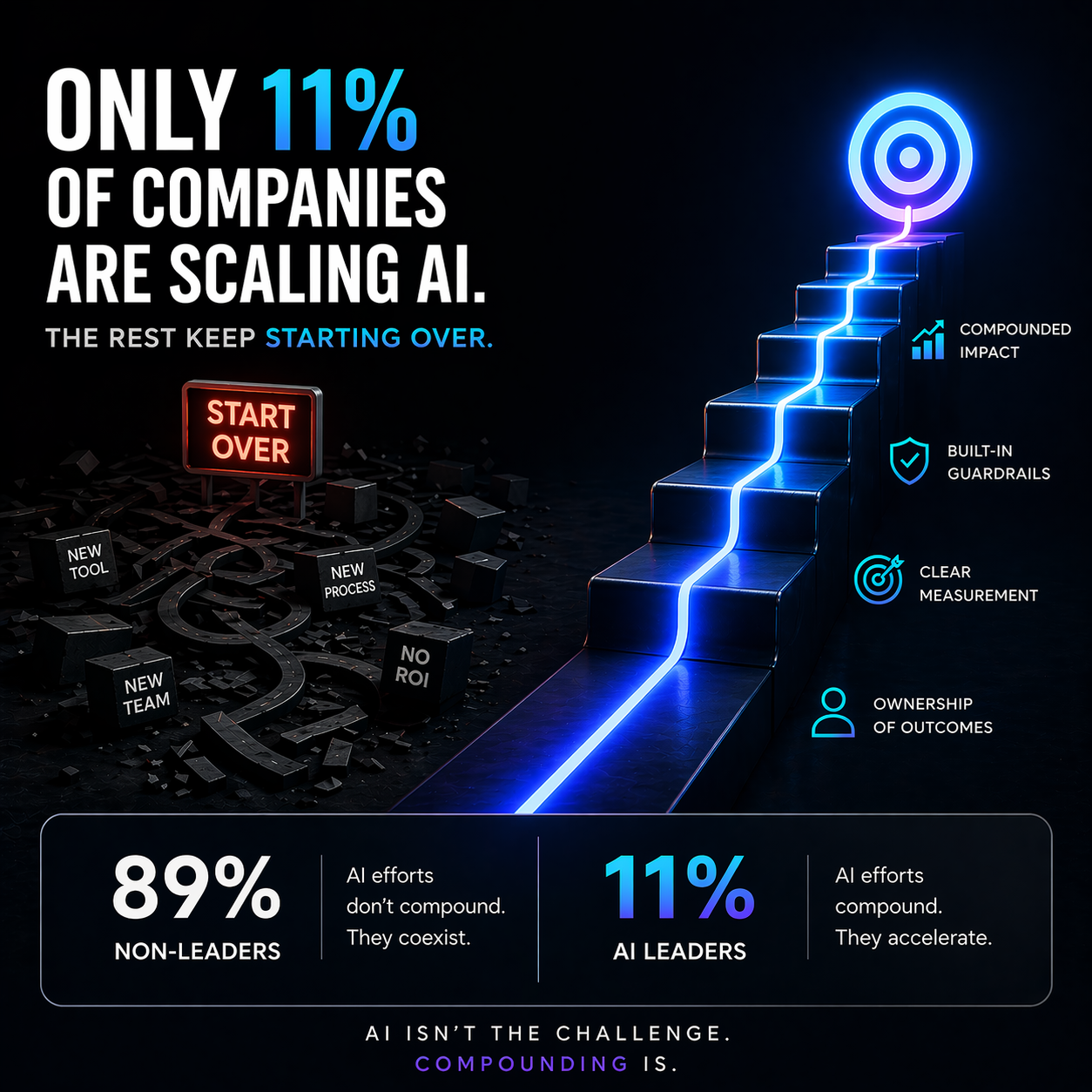
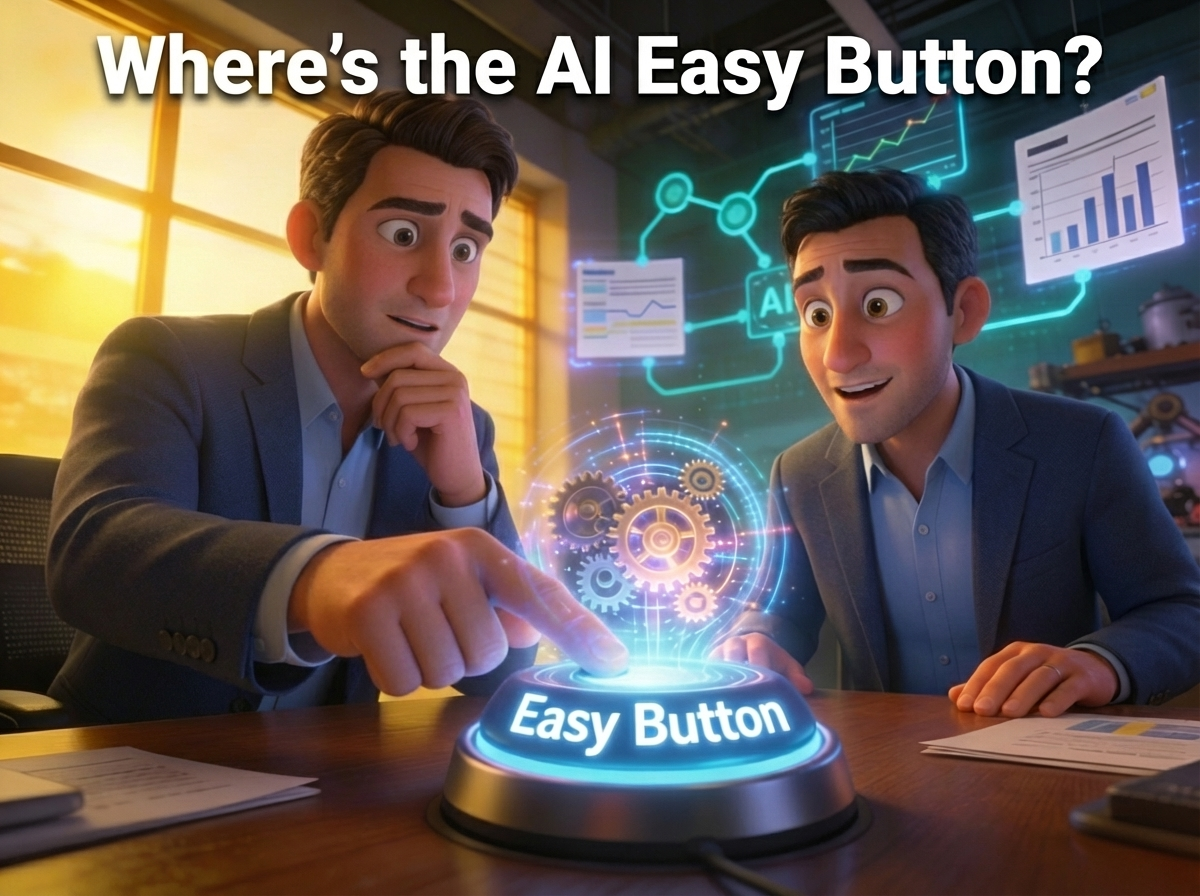
Buying another AI tool feels like progress. Most of the time it means you added one more subscription to a workflow that was already messy.

That's the pattern I keep seeing in SMBs right now. The team buys a writing tool, a chatbot tool, a meeting tool, an automation tool, maybe an agent tool on top of that. The demos look sharp. The trial goes well. Then the real business shows up. Data is inconsistent. Nobody owns the workflow. The approvals are fuzzy. The CRM is half-right. The reporting is manual. The tool didn't fail. The operating system around it did.

That's why so many AI investments stall after the excitement phase.

Why Your Domain Expertise Is More Valuable Than Your AI Prompt

Why Your Domain Expertise Is More Valuable Than Your AI Prompt

Most business owners are quietly paying for software that almost fits their business.

A platform that locks them in. A vendor that ships features they didn't ask for. A line item that climbs every renewal whether the team uses it or not.

Last month, an owner in a room I was in mentioned, almost as an aside, that he'd built his own property management operating system with AI. In seven days. The kind of thing his industry rents from vendors for around $200,000 a year.

The room went quiet.

AI Slop Is a Confession

AI Slop Is a Confession

You've seen it. The LinkedIn post that reads like a robot summarized a robot. The sales email that opens with "Dear [First Name]" and goes downhill from there. The blog post so generic it could be about any company in any sector on any planet.

"Slop" became Merriam-Webster's Word of the Year in 2025. The American Dialect Society picked it too. Everyone agrees the problem is real.

But here's the question nobody's asking: why does the slop exist?

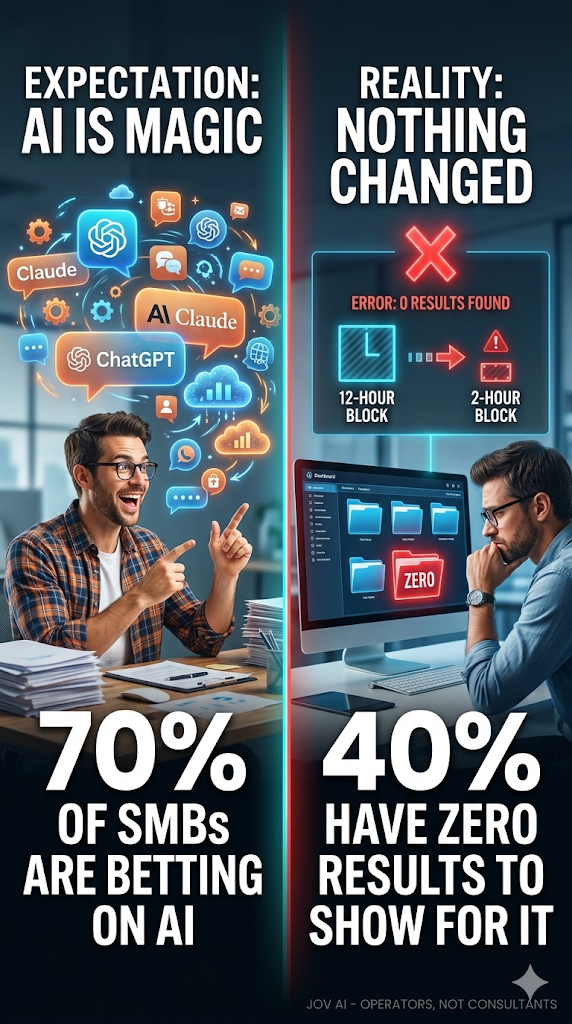
70% of Small Business Leaders Are Betting on AI. Here's What Successful AI Implementation Looks Like.

The Execution Gap

If you run a small business, you've probably had some version of this conversation in the last six months:

"We should be doing something with AI."

Maybe your office manager started using ChatGPT for emails. Maybe a competitor posted about their "AI-powered" workflow on LinkedIn. Maybe you sat through a vendor demo that promised to "transform your operations."

And then nothing happened. Or worse, something happened, but you can't point to what actually changed. Your AI implementation stalled before it started.

The Blue-Collar AI Advantage Nobody's Talking About

The Blue-Collar AI Advantage

Your best tech is losing two to three hours a day to bad routing. Your estimator is rebuilding the same spreadsheet for the third time this week. Your office manager is chasing invoices instead of chasing growth.

None of that is a technology problem. It's operational drag. And it's capping how fast your business can grow.

Most trades owners assume AI isn't for them yet. That's exactly why the ones adopting it now are pulling ahead so fast. HVAC. Plumbing. Construction. Manufacturing. Field services. Where almost no one has started, even basic AI puts you a generation ahead.

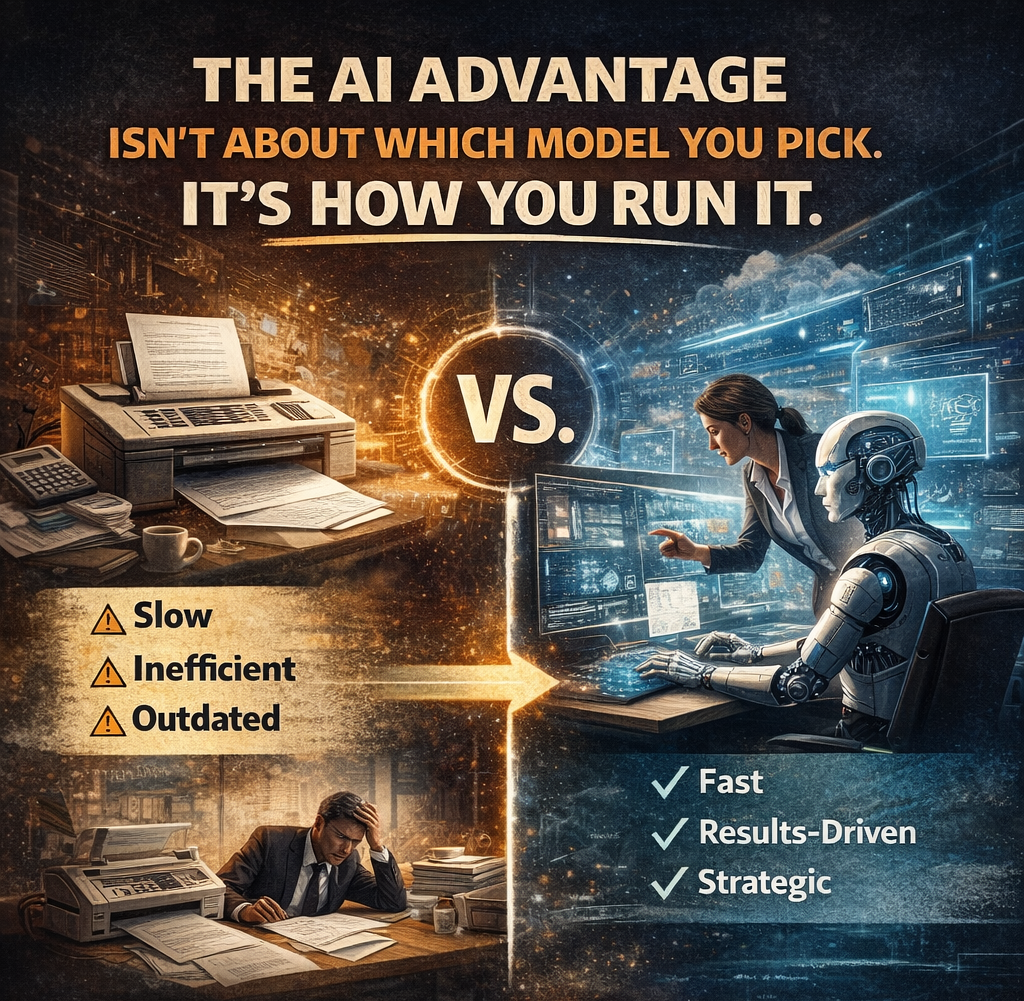
The AI Advantage Isn't About Which Model You Pick. It's How You Run It.

Every few months, a new AI model drops and the internet loses its mind. GPT-5-whatever. Gemini-some-number. The next thing.

It's like the iPhone when they were new—each number was a big deal. I used to get excited too. But can you honestly tell me the kid fresh out of college is getting more ROI out of a new iPhone than the business operator on one that's three years old?

Now, look at the guy who doesn't have a cell phone and is still faxing documents—how's he doing?

That's what I mean. Debating which AI model to use is like worrying about which carrier to get cell service through. Meanwhile, most business owners haven't figured out what to do with the last model.

Here's what's easy to miss in the noise: the models got good. Really good. Three years ago, AI couldn't write a decent email. Now it can draft proposals, analyze contracts, and handle first-line customer support. Small and medium-sized businesses have access to the same capabilities enterprise companies are spending millions to deploy.

So why are some businesses pulling ahead while others spin their wheels?

It's not which AI they picked. It's how they run it.

The AI Advantage

What Are You Waiting For?

82% of enterprise decision-makers now use AI weekly. 46% use it daily. These aren't employees experimenting on the side—these are the people running things. VPs, C-suite, the ones setting strategy and making decisions. (Wharton, 2025)

Meanwhile, only about 9% of small businesses have adopted AI. (SBA, 2025) That's SBA's cut of Census data on firms reporting active AI use, not just experimentation.

That's the gap. The models are the same. You have access to the same AI enterprise leaders are using daily.