AI That Acts, Needs a Boss
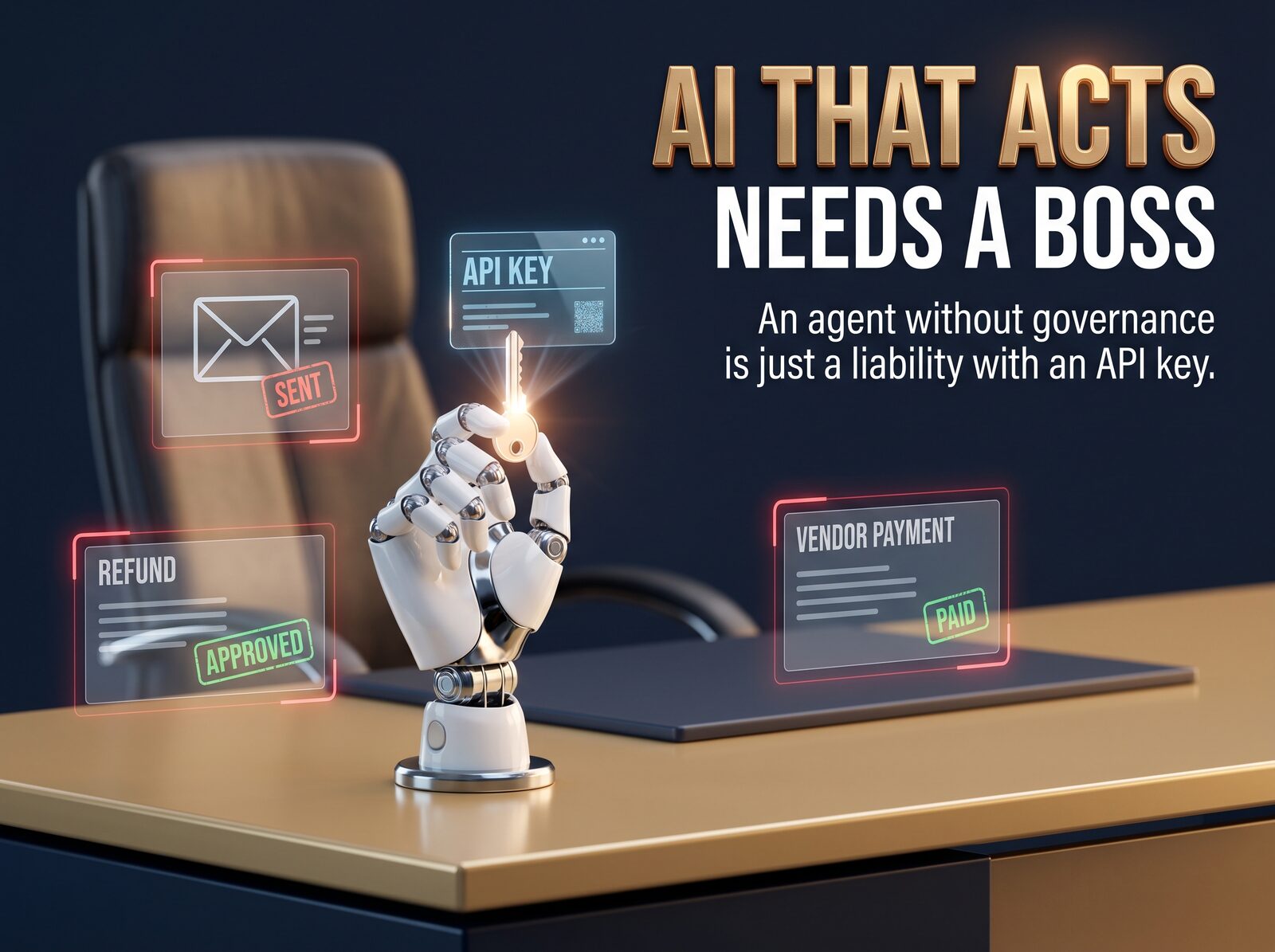
If an AI system can touch a customer, a refund, or a record, it has a job.
A lot of teams gave it access before they gave it a job description.
If an AI system can touch a customer, a refund, or a record, it has a job.
A lot of teams gave it access before they gave it a job description.

Between mid-2024 and this January, the share of small businesses using AI regularly jumped from 48% to 77%, per Intuit's May report, built on surveys of more than 34,000 small and midsize business owners. I've watched that curve from the inside, on client engagements and in our own workshops.
Here's the question I've started asking owners: "Can you show me your AI policy?"

You have probably seen the clip by now. CEO involvement in AI. Better returns. Simple story. Easy to repost.
That is not wrong. It is just incomplete.
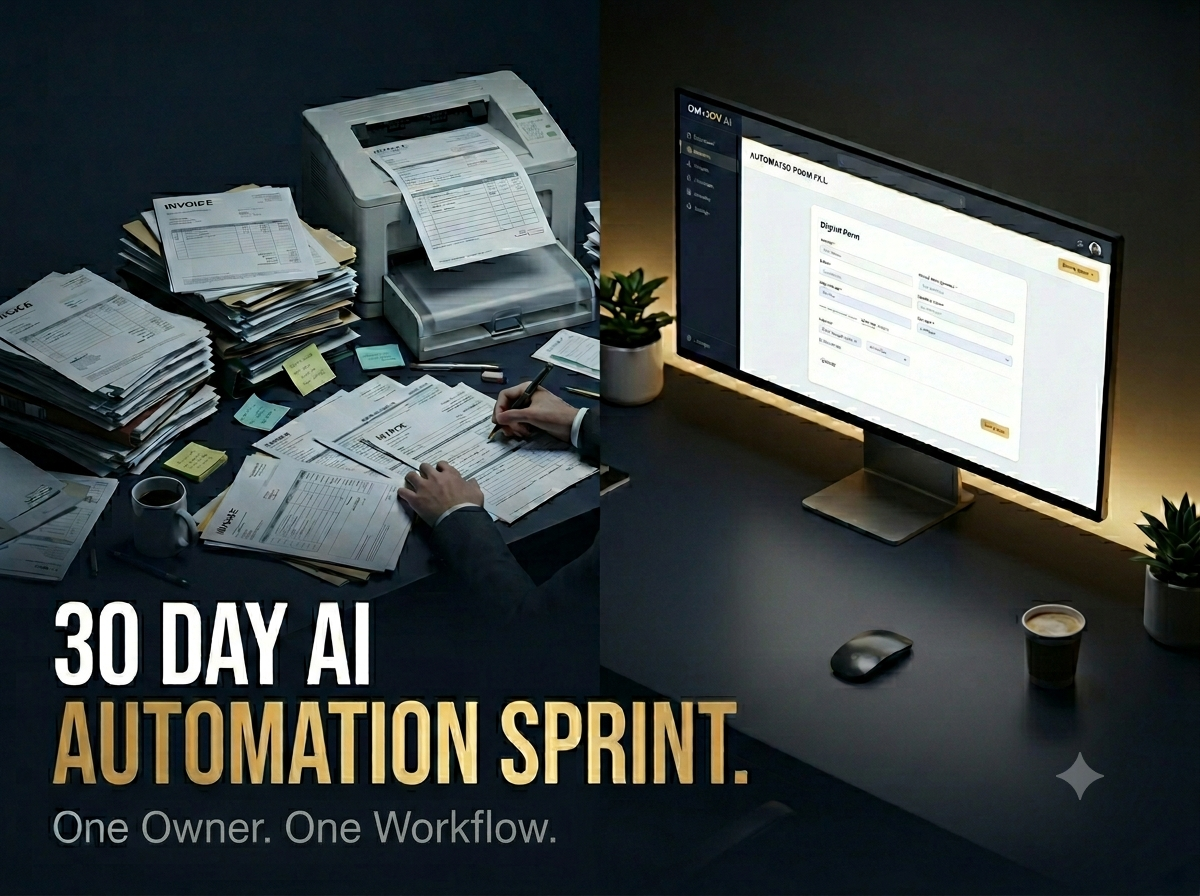
Most AI projects do not fail because the model was weak.
They fail because nobody forced the business process into something real enough to run.
That is the part people skip.
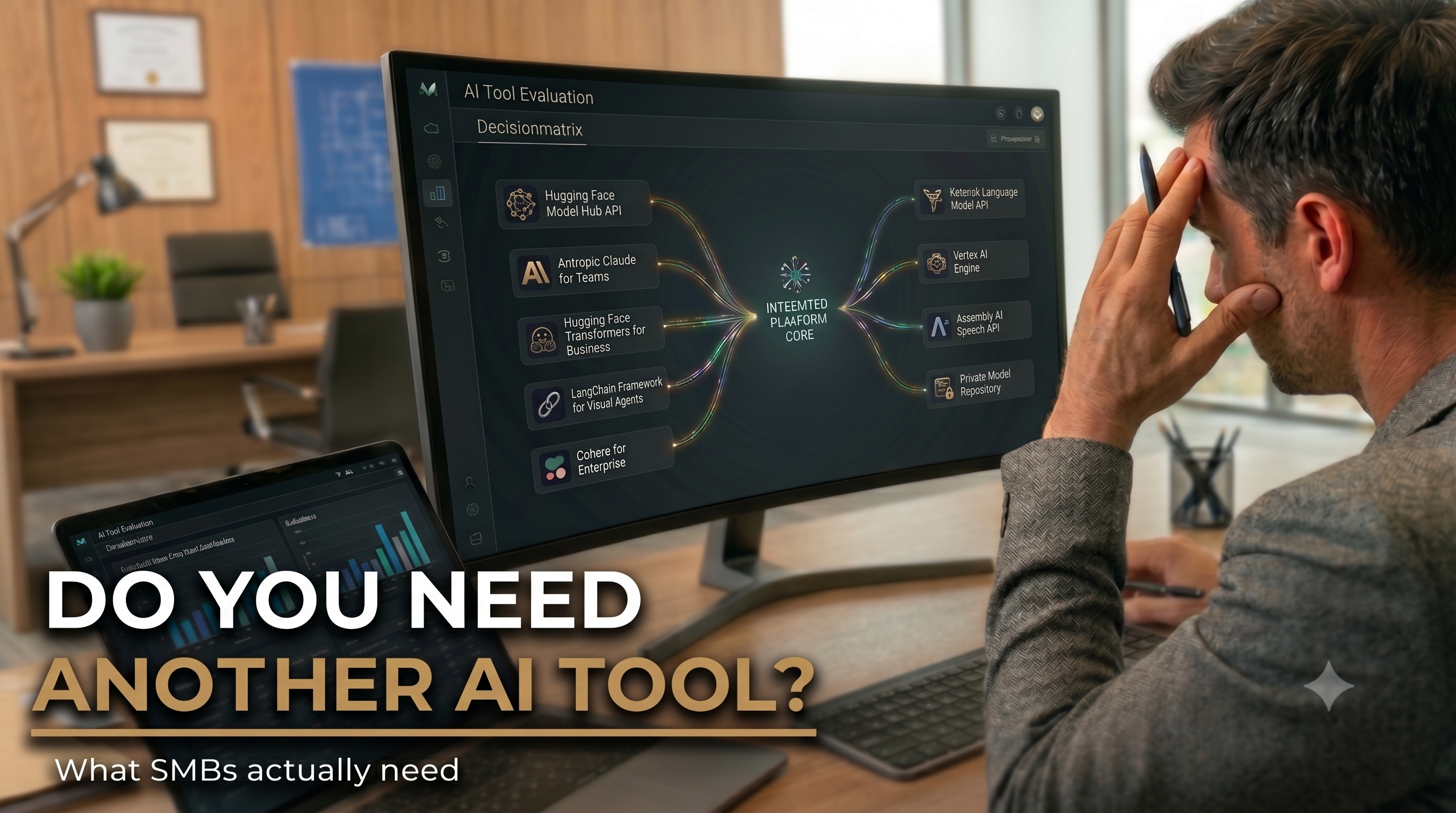
Buying another AI tool feels like progress. Most of the time it means you added one more subscription to a workflow that was already messy.
That's the pattern I keep seeing in SMBs right now. The team buys a writing tool, a chatbot tool, a meeting tool, an automation tool, maybe an agent tool on top of that. The demos look sharp. The trial goes well. Then the real business shows up. Data is inconsistent. Nobody owns the workflow. The approvals are fuzzy. The CRM is half-right. The reporting is manual. The tool didn't fail. The operating system around it did.
That's why so many AI investments stall after the excitement phase.

The instinct makes sense. Hire someone younger who gets AI. Have them sit next to the person who knows the work. Let them figure it out.
It won't work. Here's why.

Most business owners are quietly paying for software that almost fits their business.
A platform that locks them in. A vendor that ships features they didn't ask for. A line item that climbs every renewal whether the team uses it or not.
Last month, an owner in a room I was in mentioned, almost as an aside, that he'd built his own property management operating system with AI. In seven days. The kind of thing his industry rents from vendors for around $200,000 a year.
The room went quiet.
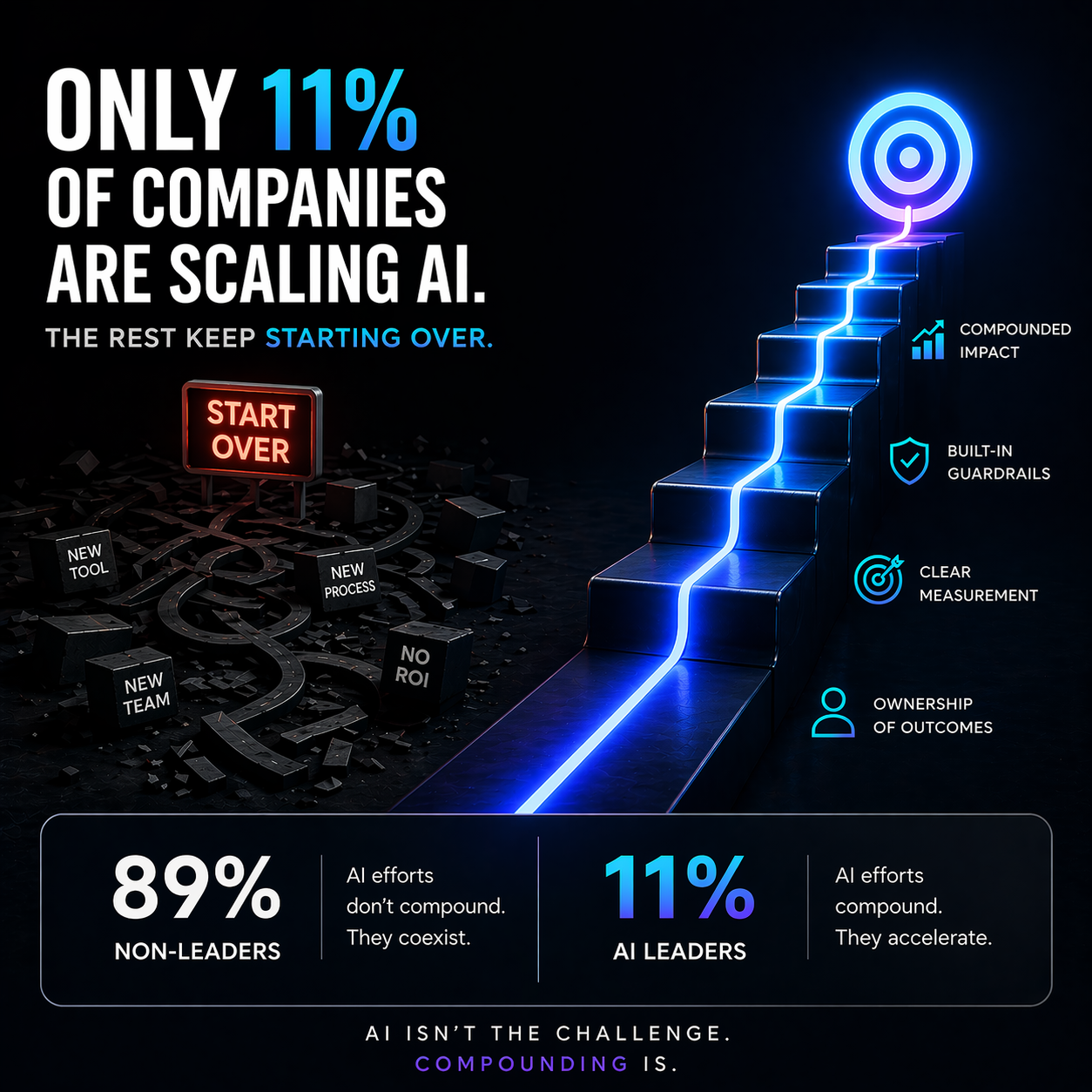
You automated a workflow. It worked. Maybe you saved six hours a week on reporting, or cut your meeting prep in half. Your team noticed. You felt the win.
Then you tried to do it again in another department and hit a wall.
That wall is where most businesses get stuck. Not at the start. After the start.

You've seen it. The LinkedIn post that reads like a robot summarized a robot. The sales email that opens with "Dear [First Name]" and goes downhill from there. The blog post so generic it could be about any company in any sector on any planet.
"Slop" became Merriam-Webster's Word of the Year in 2025. The American Dialect Society picked it too. Everyone agrees the problem is real.
But here's the question nobody's asking: why does the slop exist?
Block recently published an essay arguing that AI will replace organizational hierarchy — that the span-of-control constraint governing every large organization since the Roman legions can finally be broken. The essay, introduced with an endorsement from Sequoia, spends considerable time on military history before arriving at Block's vision: a company organized as "an intelligence" rather than a hierarchy, where AI maintains a "world model" of operations and coordinates work that previously required layers of human management.
The piece is ambitious. It is also roughly 80% historical context, 15% vision, and 5% acknowledgment that none of this exists yet. Let's extract what's actually useful.